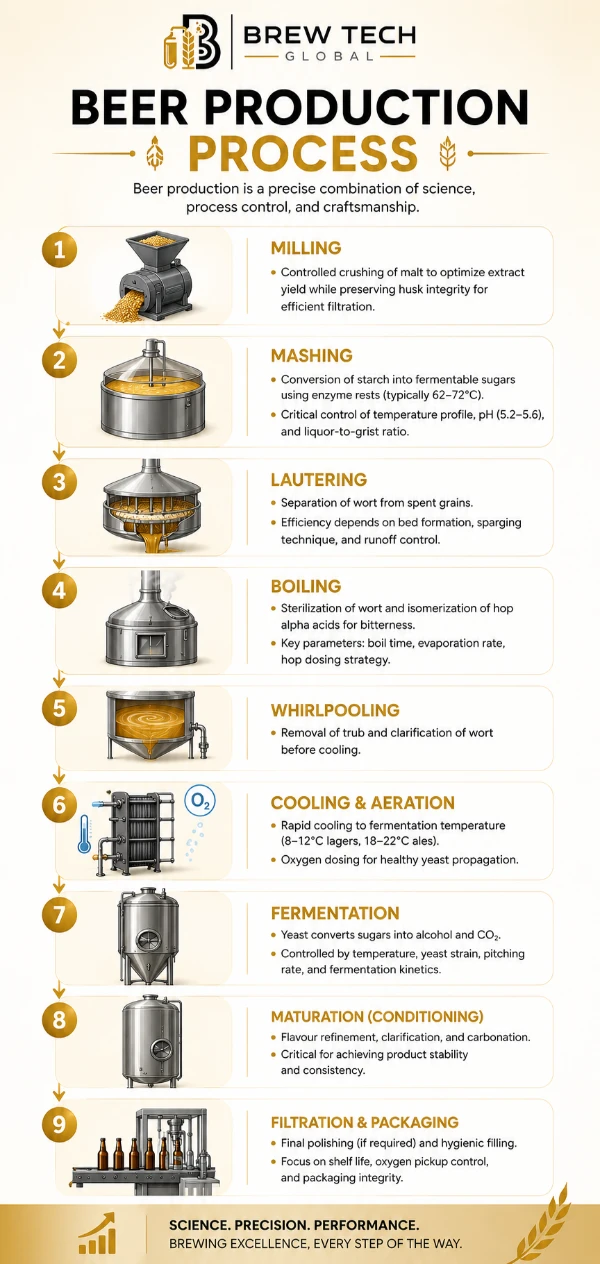
Beer production is a precise combination of science, process control, and craftsmanship. The core stages include:
- Milling
- Controlled crushing of malt to optimize extract yield while preserving husk integrity for efficient filtration.
- Mashing
- Conversion of starch into fermentable sugars using enzyme rests (typically 62–72°C).
- Critical control of temperature profile, pH (5.2–5.6), and liquor-to-grist ratio.
- Lautering
- Separation of wort from spent grains.
- Efficiency depends on bed formation, sparging technique, and runoff control.
- Boiling
- Sterilization of wort and isomerization of hop alpha acids for bitterness.
- Key parameters: boil time, evaporation rate, hop dosing strategy.
- Whirlpooling
- Removal of trub and clarification of wort before cooling.
- Cooling & Aeration
- Rapid cooling to fermentation temperature (8–12°C lagers, 18–22°C ales).
- Oxygen dosing for healthy yeast propagation.
- Fermentation
- Yeast converts sugars into alcohol and CO₂.
- Controlled by temperature, yeast strain, pitching rate, and fermentation kinetics.
- Maturation (Conditioning)
- Flavour refinement, clarification, and carbonation.
- Critical for achieving product stability and consistency.
- Filtration & Packaging
- Final polishing (if required) and hygienic filling.
- Focus on shelf life, oxygen pickup control, and packaging integrity.
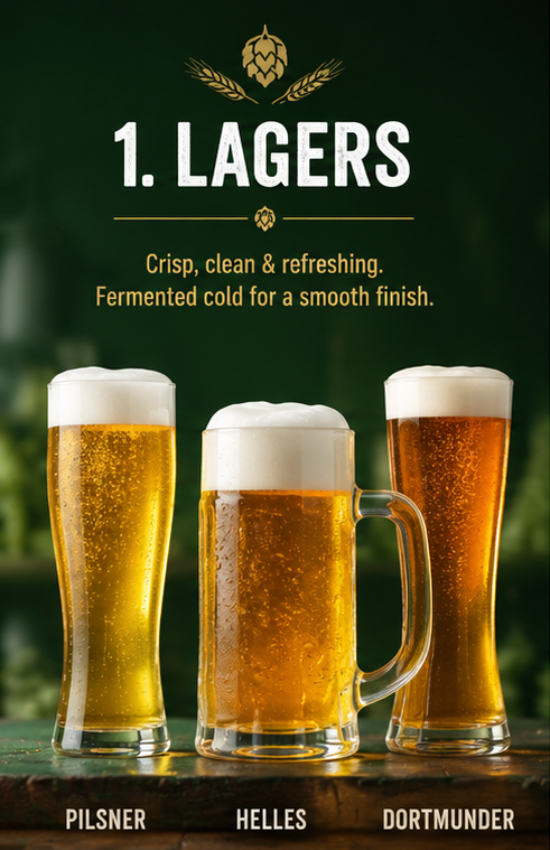
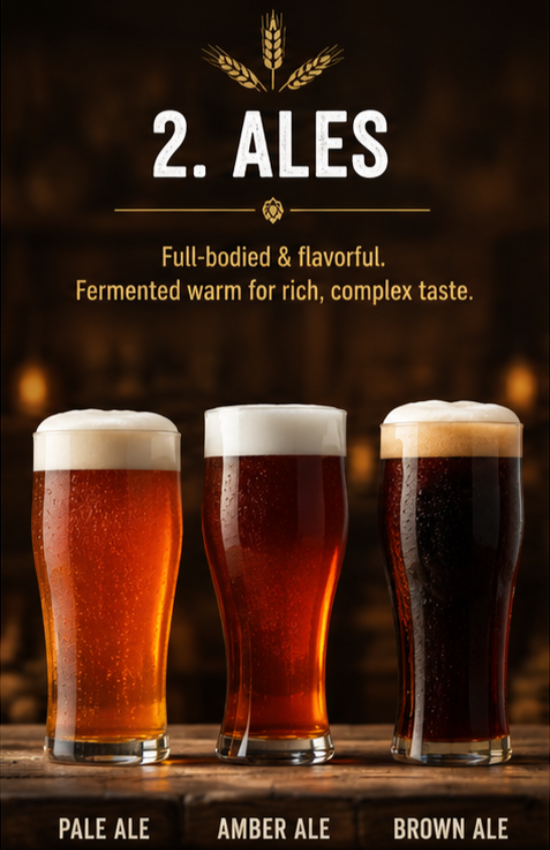
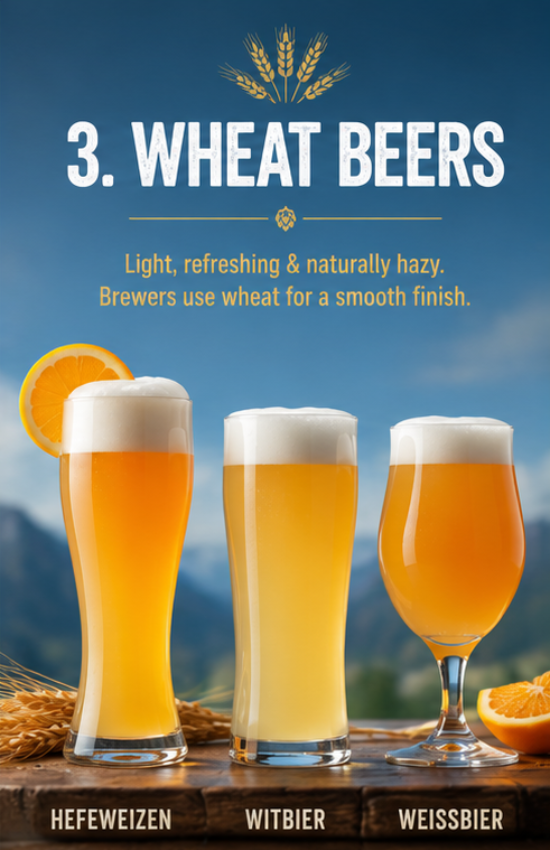
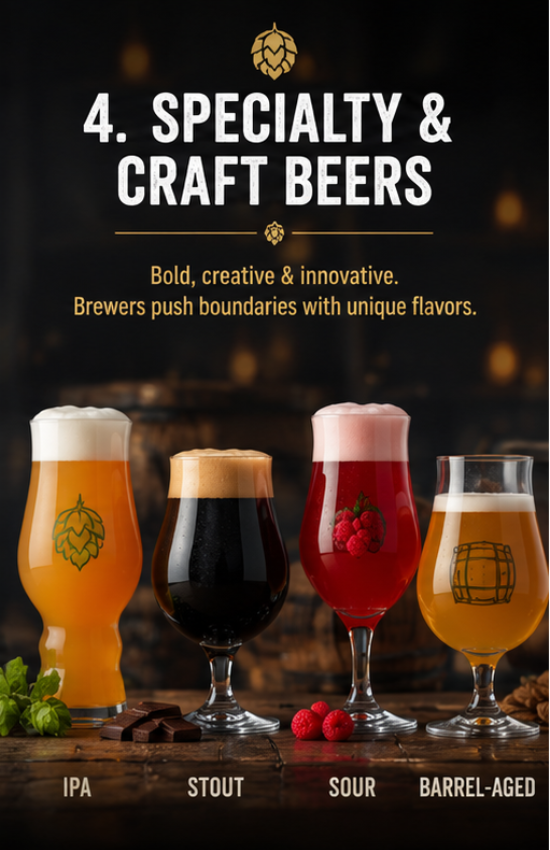
Major Types of Beer
Key Technical Focus Areas for Brewing Excellence

Raw Material Quality
Malt modification, hop utilization, yeast health, and water chemistry optimization.

Process Efficiency
Brewhouse yield improvement, energy optimization, and cycle time reduction.

Fermentation Control
Yeast management, attenuation control, and off-flavour prevention.

Quality Assurance
Strict control of microbiological stability, sensory consistency, and analytical parameters.

Automation & Technology
o Integration of PLC/SCADA systems for process control and data-driven decision-making.

Cost Optimization
Reduction in losses (wort, beer, utilities), optimized raw material usage.